Spreads
Yes or no tarot: how to ask, how to read the lean, and what your reaction tells you
One question, one card, three possible answers. Here is how the traditional yes, no and maybe work — and why the most useful part is how the answer lands.
What is yes or no tarot?
Yes or no tarot is the simplest tarot format there is: one question, one card, one of three answers. You ask something that can be answered with a yes or a no, draw a single card and look at which way that card traditionally leans. Bright, open cards like The Sun are traditionally read as a yes. Cards about endings and upheaval, like The Tower, are traditionally read as a no. Cards about waiting or uncertainty, like The Moon, are read as a maybe.
That’s the whole mechanic. What makes it worth doing is the moment just after you see the answer — and that is what most of this guide is about.
Why a yes or no answer can still help
A yes-or-no draw can be useful even if you don’t believe a card knows anything, because the answer works as a test of how you feel. Think of the old trick of flipping a coin when you can’t decide. You don’t really follow the coin. While it’s in the air, you notice which side you’re hoping for.
A tarot card does the same thing, with a picture and a meaning attached. If the answer is a no and your stomach drops, you’ve learned that you want this more than you admitted. If the answer is a yes and you feel a quiet “oh no”, that’s worth knowing too.
This is how we use yes or no tarot at Tarot Told Me: as a gut check, not a ruling. It’s part of a wider approach we call reflective tarot — using the cards as pictures to think with rather than signs to obey.
How to ask a yes or no question
A good yes-or-no question is short, about you, and about something you can act on. The shape of your question decides how useful the answer will be.
- Ask about your own choice. “Should I apply for this job?” gives you something to react to. “Will he call me?” puts the answer in someone else’s hands, and no card can see into another person.
- Ask one thing at a time. “Should I move and change jobs?” is two questions. Split them and draw for each.
- Keep it close to now. “Am I ready to start this?” works better than “Will this work out in five years?”
- Write it down. Writing makes the question concrete, and later you’ll see what you were really asking.
| Instead of | Try |
|---|---|
| Will he text me back? | Do I want to text him first? |
| Will I get the job? | Should I apply for this job? |
| Is she angry with me? | Do I want to bring this up with her? |
| Will this year be better? | Am I ready to make one change this month? |
If your question isn’t really a yes-or-no question — “What should I do about my sister?” — a single lean will feel thin. A three-card spread gives you more room: a past, a now and a next step.
How the lean is traditionally read
In yes or no tarot, every card carries a traditional lean: yes, no or maybe. The leans aren’t made up for each reading; they grow out of each card’s general meaning in the tarot tradition.
- Yes is traditionally given to the open, warm or moving cards: beginnings, celebration, steady effort, things coming together. The Sun, The Star, The World and all four Aces are classic examples.
- No is traditionally given to cards about endings, loss, conflict or feeling stuck: The Tower, Death, the Five of Cups and most of the heavier Swords.
- Maybe is traditionally given to cards about waiting, mystery or balance: The Moon, The Hanged Man, the Two of Swords. A maybe isn’t a hidden yes. Read it as “not clear yet” — often there’s something you don’t know or haven’t decided.
Readers sometimes disagree about single cards, especially the maybes, and some read any reversed card as leaning towards no. Our free yes or no tool keeps it simple: every card is drawn upright and shows its traditional lean.
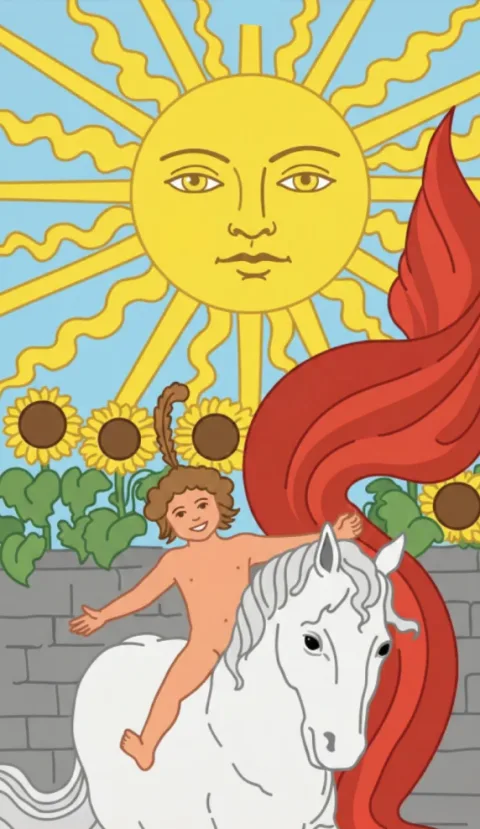 Card meaningThe SunThe Sun — traditionally the clearest yes in the deck.
Yes or no tarot card meanings: the full list
Here is how all 78 cards traditionally lean in yes-or-no questions, as used in our tool. Treat it as a map of the tradition, not a rulebook.
| Lean | Major Arcana | Minor Arcana |
|---|---|---|
| Yes (48 cards) | The Fool, The Magician, The Empress, The Emperor, The Hierophant, The Lovers, The Chariot, Strength, Wheel of Fortune, Temperance, The Star, The Sun, Judgement, The World | All four Aces; every court card except the Page of Swords; Two, Three, Six, Nine and Ten of Cups; Three, Four, Six and Eight of Wands; Six of Swords; Three, Six, Eight, Nine and Ten of Pentacles |
| Maybe (16 cards) | The High Priestess, The Hermit, Justice, The Hanged Man, The Moon | Four and Seven of Cups; Two, Seven and Nine of Wands; Two and Four of Swords; Page of Swords; Two, Four and Seven of Pentacles |
| No (14 cards) | Death, The Devil, The Tower | Five and Eight of Cups; Five and Ten of Wands; Three, Five, Seven, Eight, Nine and Ten of Swords; Five of Pentacles |
A few of these surprise people, so here is the reasoning behind them.
- Death is traditionally a no in the narrow sense that something, as it is now, is ending. It isn’t about anyone’s life — in tarot it’s the card of closing a chapter.
- The Hermit is a maybe because its picture is about stepping back to think first. The traditional answer is “not before you’ve had some quiet”.
- Justice is a maybe because the answer traditionally depends on what is fair — and on facts you may not have yet.
- The Moon is a maybe because the scene is lit only by moonlight: not everything is visible yet.
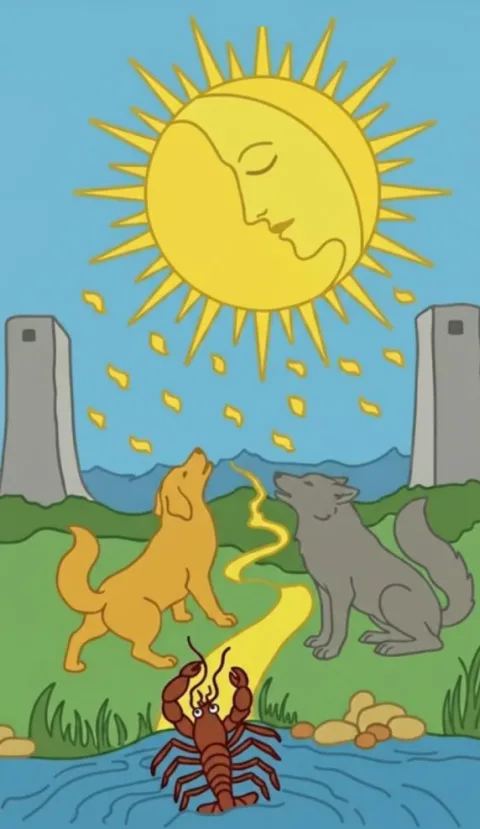 Card meaningThe MoonThe Moon — traditionally a maybe: not everything is visible yet.
Every card has its own page with the upright and reversed meanings and a line on how it’s read in yes-or-no questions. If you draw The Tower or The Star, the page tells you more than one word can.
What to do with your reaction
The most useful moment in a yes-or-no reading is the second right after you see the answer. Before you read anything about the card, notice what happened in your body and in your head.
- Relief. You wanted that answer. You probably knew before you drew.
- Disappointment or resistance. You wanted the opposite. That’s information: the side you’re arguing for is the side you care about.
- The urge to draw again. Very common, and very telling. If you want another card, you may already know which answer you were hoping for.
- Not much at all. Maybe the question matters less than you thought, or it isn’t the real question. Ask yourself what sits underneath it.
Then turn what you noticed into one small step. Say you ask, “Should I sign up for the pottery class?” and draw the Five of Wands — traditionally a no. You feel annoyed, because you really want to go. The card didn’t decide anything; it showed you that you had already decided. The step: sign up tonight.
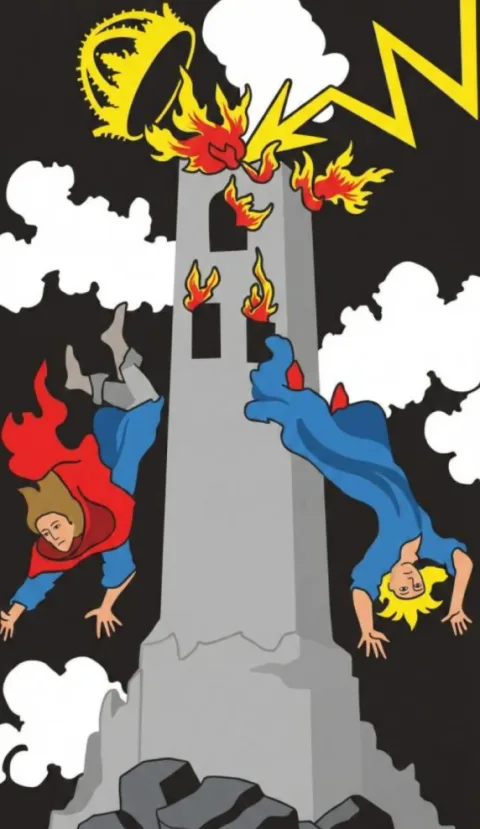 Card meaningThe TowerThe Tower — traditionally a no. Notice whether that lands as fear, or as relief.
When a card shouldn’t be the one deciding
A single card is a fine way to check your gut about everyday choices, but it isn’t the right tool for every question. For decisions about your health, money, legal matters or safety, a card can help you notice how you feel about the choice — it shouldn’t be what makes it. Talk to someone qualified, or to someone you trust.
The same goes for questions about other people’s thoughts and feelings. A card can’t tell you whether someone likes you, misses you or will change. You can ask about your side instead: “Do I want to reach out?” is a question you can actually answer.
Try it
You can draw a yes-or-no card right now, for free and without signing up. Keep one question in mind, draw, and watch how the answer lands.
Tarot Told Me is a reflective tarot app coming to iPhone and Android, built around the same idea: a reading starts with your question, not with a random card. You can read more about why we built it.
Frequently asked
Is yes or no tarot accurate?
It isn’t a prediction, so “accurate” isn’t quite the right measure. Each card has a traditional lean — yes, no or maybe — and you see the lean of the card you drew. The more useful question is whether the answer helped you notice what you actually want.
Which tarot cards mean yes?
Traditionally, the open and warm cards are read as a yes: The Sun, The Star, The World, The Lovers, all four Aces and most court cards, among others — 48 of the 78 cards in total. The full list is in the table above.
Which tarot cards mean no?
Traditionally, cards about endings, loss or conflict are read as a no: The Tower, Death, The Devil, the Five of Cups, the Five of Pentacles and most of the heavier Swords — 14 cards in total.
What does maybe mean in yes or no tarot?
A maybe is traditionally read as “not clear yet”. The situation isn’t settled or you need more information. It isn’t a hidden yes — take it as a cue to wait, ask a better question, or find out what you don’t know.
Can I ask the same question twice?
You can. Notice why you want to, though: if you want to draw again, you may already know which answer you were hoping for — and that may tell you more than the card. Asking the question differently tends to help more than asking it again.
Can yes or no tarot tell me what someone else will do?
No. A card can’t see into another person’s mind or decide what they will do. Turn the question towards your side — “Do I want to reach out?” instead of “Will he reach out?” — and the answer becomes something you can use.