Self-reflection
Tarot card of the day: a two-minute practice for the morning or the evening
One card, one question to carry, one line in a notebook. How to use a daily card as a prompt for today — not a forecast for it.
What is a tarot card of the day?
A tarot card of the day is one card you draw at the start or the end of a day and use as a prompt for attention. You don’t ask the card what will happen. You look at its picture, read what the card is traditionally associated with, and pick one small thing to notice or try today.
The appeal is in how little it asks. A full spread needs a question, time and a quiet room. A daily card fits between the alarm and the kettle. Some days it will feel spot on, some days it won’t seem to fit at all, and both are fine — the point isn’t the card, it’s the minute of attention you give yourself.
A prompt for today, not a forecast
A daily card works best when you treat it as a theme to look out for rather than a description of the day ahead. If you draw the Five of Cups, it doesn’t mean something sad will happen. The card traditionally stands for grief and for focusing on what’s been lost — so it might simply prompt you to notice where you keep looking backwards today.
This is the core of reflective tarot: the card doesn’t know anything about your day, and it doesn’t decide anything. It gives your attention somewhere to start. What happens today is still yours.
A two-minute morning practice
A morning card takes about two minutes and needs nothing more than one card and something to write with. Here is the whole practice.
- Pause for one breath. Before you draw, notice how you feel right now: tired, calm, rushed, low, hopeful. One word is enough.
- Draw one card. From a physical deck, or from our free card of the day tool.
- Look before you read. Spend a few seconds on the picture. What’s the first thing you notice? A figure resting, someone walking away, a cup being offered? That first impression is already yours.
- Read the traditional meaning. Glance at the card’s meaning and notice where it agrees with your first impression, and where it doesn’t.
- Choose one thing to notice. Finish with a single sentence: “Today I’ll notice…” or “Today I’ll try…”. Keep it small enough to actually do.
That last step matters most. “Today I’ll notice when I say yes too quickly” is something you can carry through a meeting. “Today is about transformation” isn’t.
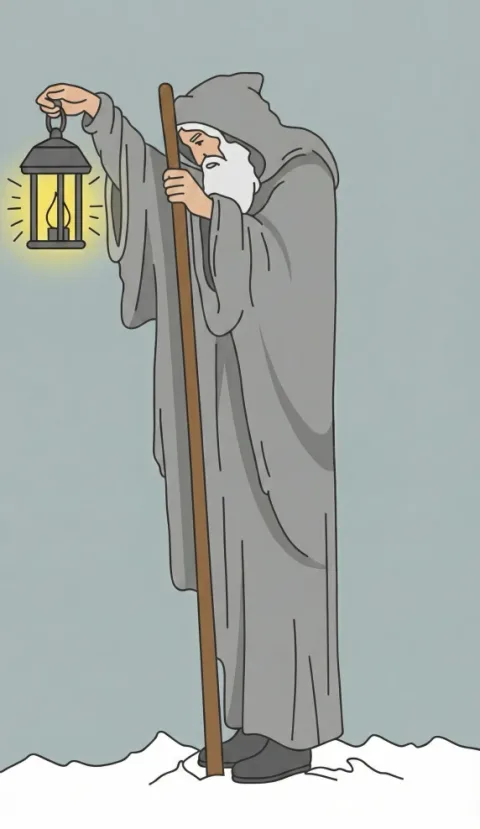 Card meaningThe HermitThe Hermit — traditionally read as solitude and reflection. As a daily prompt: where could you use ten quiet minutes today?
An evening version
An evening card works the other way round: instead of setting a theme for the day, you use the card to look back at it. Many people find this easier, because the day has already happened and there’s something concrete to reflect on.
Draw a card before bed and ask yourself one question with it in front of you: “Where did I see this today?” If you draw Temperance, traditionally a card of balance and patience, you might think about the moment you kept your temper — or the moment you didn’t. If you draw the Four of Swords, traditionally a card of rest, you might notice how little of it you got.
You can also combine both: draw in the morning, then come back to the same card at night and ask how the theme actually showed up. It’s a small loop, but it’s the part that turns a daily draw from a ritual into a habit of noticing.
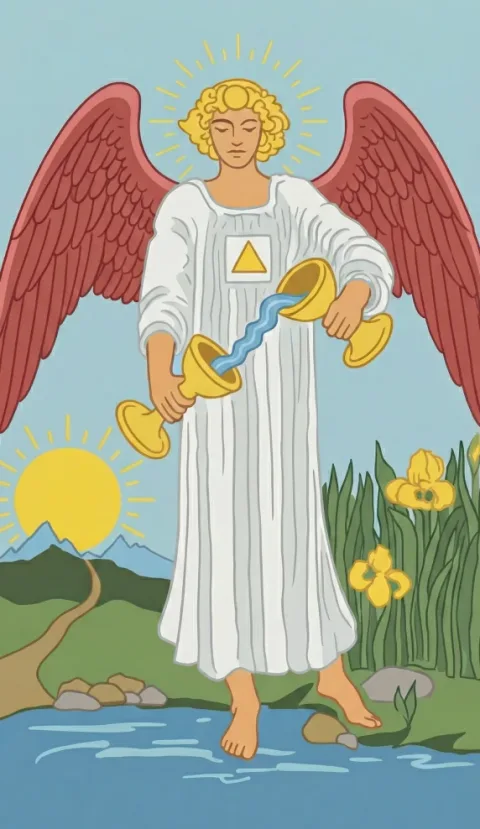 Card meaningTemperanceTemperance — traditionally read as balance and patience. In the evening: where did you find the middle ground today?
Journaling with your daily card
A daily tarot journal can be as short as one line, as long as you write it every time. The simplest format is four parts: the date, how you felt before drawing, the card, and one sentence about what you noticed.
6 October · rushed · Page of Cups · I almost ignored a friend’s message because I was busy. Replied in the evening and felt lighter.
If you have a bit more time, use one of these prompts. Pick one, not all of them.
Prompts for your daily card
- What is the first thing I notice in this picture, before I read anything?
- Where in my life does this image feel familiar right now?
- If this card were a question for me today, what would it ask?
- What is one small thing I could do today in the spirit of this card?
- In the evening: where did I see this card’s theme today, if anywhere?
Writing helps for a simple reason: it makes a vague feeling concrete enough to look at. A notebook works perfectly well. What matters is that you write a line on the days the card fits and on the days it doesn’t.
When you don’t like your card
A card you don’t like is often the most useful one, because the resistance itself tells you something. Before you draw again, try to name what bothers you about it.
Say you draw the Ten of Wands, a figure bent under a bundle of heavy sticks, traditionally read as burden and overload. If your first reaction is “not today”, ask: what am I carrying that I’d rather not look at? That reaction is worth more than a card you’d have liked better.
Some cards look frightening at first glance. The Tower and Death are traditionally about sudden change and endings — in a daily practice, a prompt to notice what isn’t working any more, not a warning about the day. If a card feels heavy, keep the prompt light: “What could I let go of today, even something small?”
Noticing patterns over a week or a month
Patterns are where a daily practice becomes really interesting. After a couple of weeks of one-line entries, read them back and ask three questions: which cards came up more than once, which moods kept appearing, and what did I actually do after drawing?
A card that keeps returning isn’t a sign from fate. But it’s worth asking why that image keeps feeling relevant. If The Star appears three times in a month, you might ask whether hope has been on your mind lately; if the Swords keep showing up, whether your head has been louder than usual. The reflective tarot guide has more on keeping a record over time.
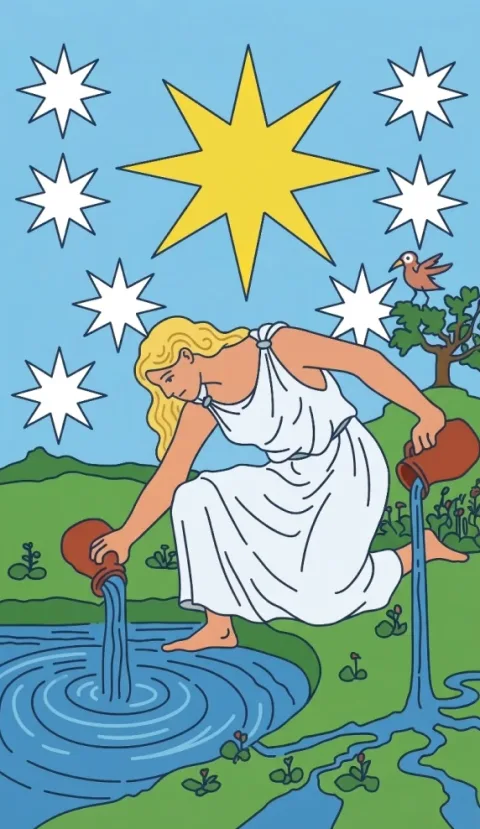 Card meaningThe StarThe Star — traditionally read as hope and renewal. If it keeps coming back, ask what you’re starting to trust again.
Draw your card for today
You can draw your daily card right now, for free and without signing up. One card is drawn from all 78, and it stays the same for the rest of your day, so you can come back to it in the evening.
Tarot Told Me is a reflective tarot app coming to iPhone and Android. In the app, each reading is saved to a journal, so the patterns become easier to see over time.
Frequently asked
Is a daily tarot reading a prediction?
No. A card of the day is a prompt for attention — a small theme to notice today. The card doesn’t know what will happen, and what happens today is still up to you.
Should I draw my daily card in the morning or the evening?
Either works. In the morning the card sets a theme to look out for; in the evening it becomes a lens for looking back at the day. Many people draw in the morning and come back to the same card at night.
Can I draw again if I don’t like my card?
You can, but in our tool you’ll get the same card until midnight. Try sitting with it first. A card you don’t like often points to what you’d rather not look at, and naming that is useful. Ask yourself what exactly bothers you about the picture.
What does it mean if I keep drawing the same card?
With 78 cards, repeats happen more often than you’d expect. A repeated card isn’t a message, but it is a good moment to ask why that image keeps feeling relevant and what you might be avoiding or hoping for.
Do I read my daily card upright or reversed?
In our free tool every card is drawn upright and read as a focus for the day. If you use a physical deck and like reversals, each card’s page explains both the upright and the reversed meaning.
Do I need a tarot deck for a daily card?
No. Any illustrated deck works if you have one, and our free card of the day tool draws from a full 78-card deck. What matters is the minute you spend with the picture.