Reflective tarot: what it is and how to use tarot for self-reflection
Reflective tarot uses the cards as images for understanding yourself — not for predicting the future. Here is what it means, where it comes from, and how to practice it.
What is reflective tarot?
Reflective tarot is a way of using tarot cards for self-reflection rather than fortune-telling. Instead of asking the cards what will happen, you ask a question about yourself, draw a card, and use its picture as a mirror: what you notice in the image — and how you react to it — helps you see your own situation more clearly.
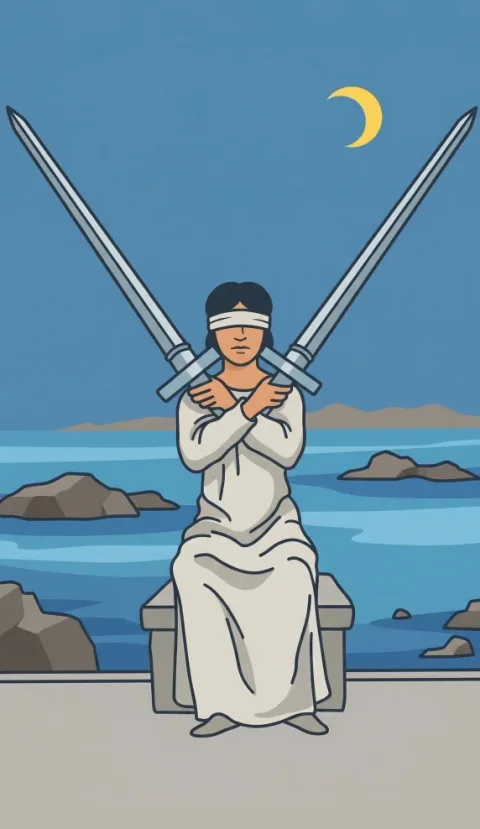
Imagine you’re torn about a job offer. A predictive reading asks, “Will I get it?” A reflective reading asks, “What do I need to see about this choice?” You draw the Two of Swords: a blindfolded figure holding two crossed blades. You may notice that you’ve been refusing to look at one side of the decision. The card didn’t tell your future. It helped you notice something you were avoiding.
Reflective and predictive tarot
Reflective and predictive tarot use the same 78 cards. They differ in the question you bring and in what you hope to take away. Neither is the right way to read — they answer different needs.
| Predictive tarot | Reflective tarot | |
|---|---|---|
| The question | “Will he come back?” | “What do I need to see about this relationship?” |
| The role of the cards | A glimpse of what may be ahead | A picture to think with |
| Your role | Receive and interpret an answer | Notice, interpret, decide |
| What you leave with | A sense of where things are heading | A clearer view and one next step |
| Other people | Their feelings can be part of the reading | The reading stays with your side |
You don’t have to choose. Many people who read predictively enjoy a reflective reading now and then, and the other way round. It’s a matter of taste, and of what you’re looking for that day. Tarot Told Me is built around the reflective approach, so that’s the one this guide explains.
Where the idea comes from
The idea that tarot is only for fortune-telling is newer than the cards themselves — and psychology has been working with images like these for almost a century.
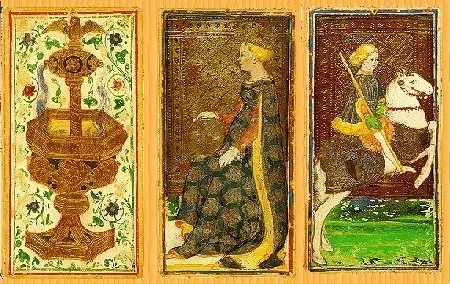
Tarot started as a game. The first tarot decks were made in fifteenth-century northern Italy for a card game called tarocchi. The mystical reputation came much later: in 1781 the French writer Antoine Court de Gébelin claimed the cards hid ancient Egyptian wisdom — a theory historians have found no evidence for.
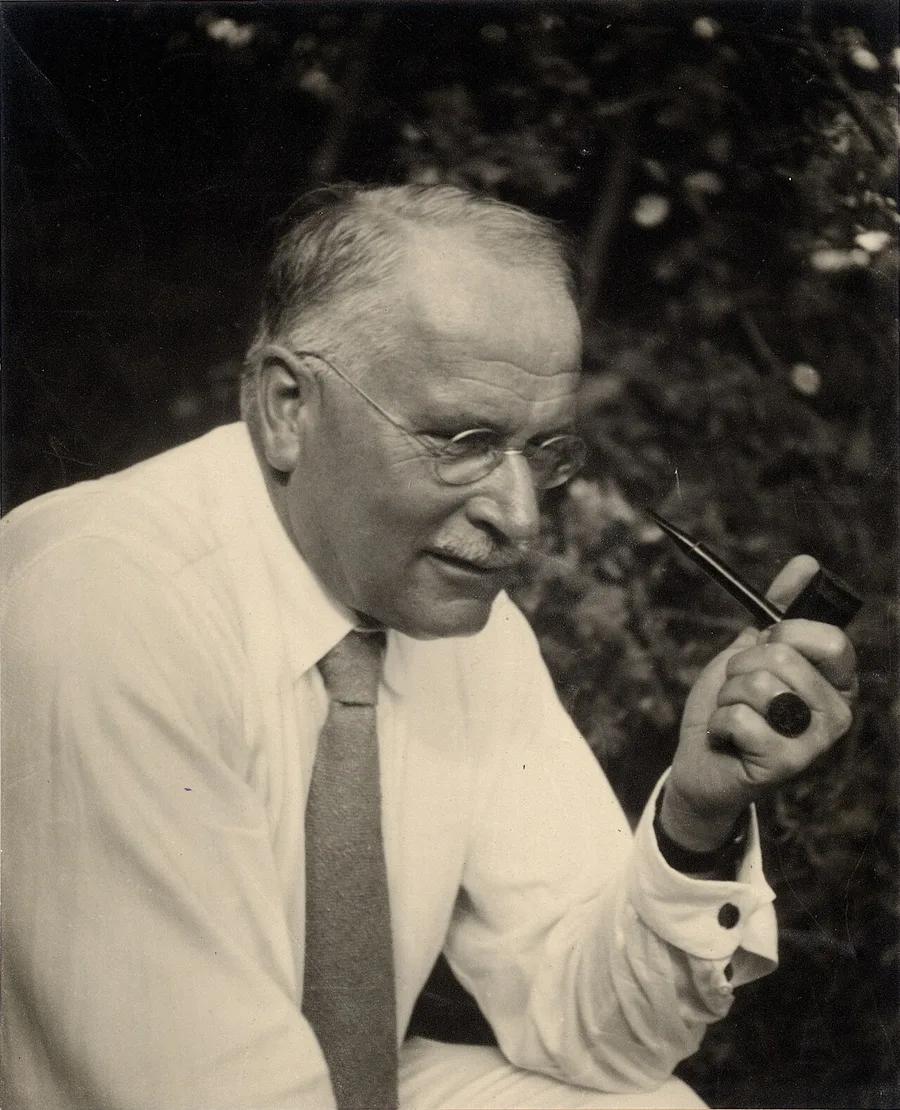
Carl Jung and the archetypes. On 1 March 1933, during a seminar on active imagination, the Swiss psychiatrist Carl Gustav Jung talked about tarot. He described the cards as “psychological images, symbols with which one plays” — much as the unconscious plays with its own contents. Scenes from the Major Arcana, like the Sun, the Hanged Man and the Tower, he counted among archetypal ideas: images shared by all people. In fairness, Jung didn’t rule out tarot’s predictive side either. What reflective tarot takes from him is something else — that these images speak to something deep inside us.
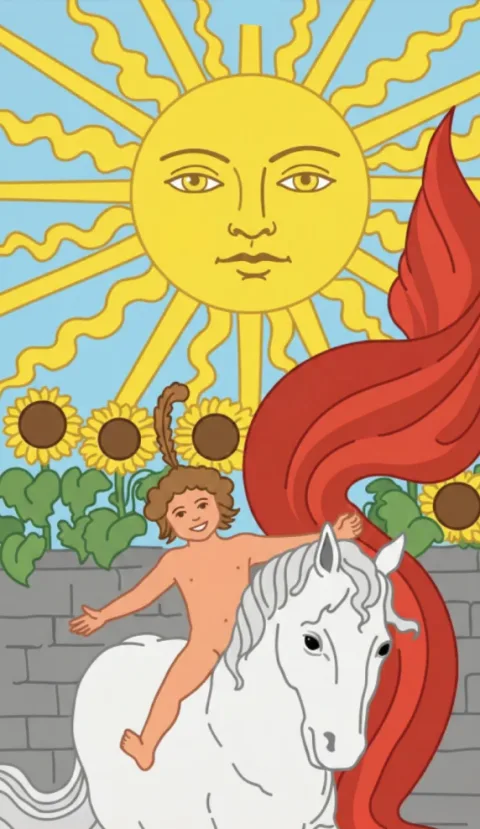
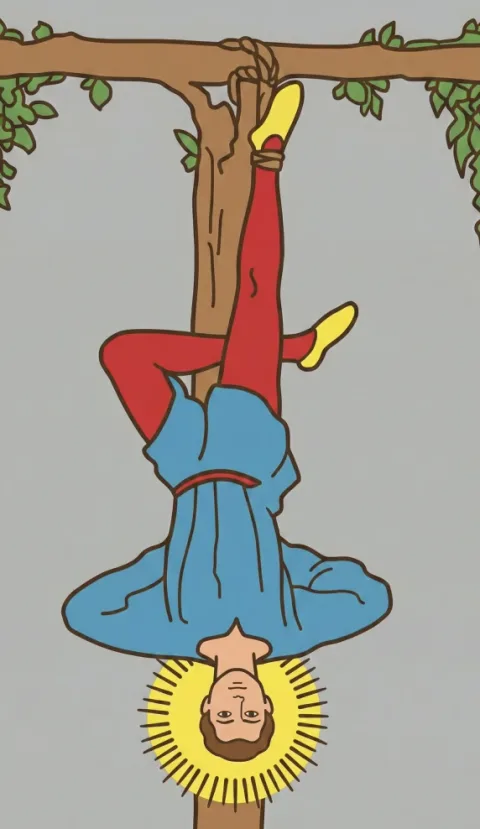
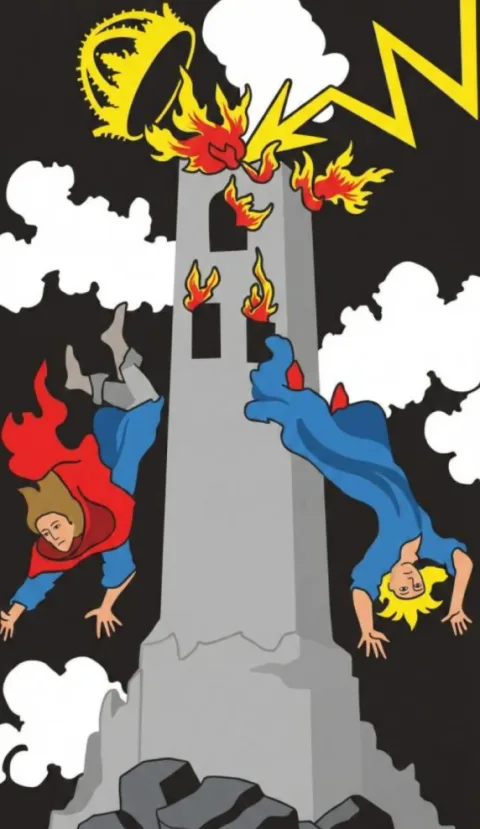
The common thread is simple: a picture you can read in more than one way gives your own thoughts a place to land. That is the move reflective tarot makes with every card.
A test made of magazine pictures. In the 1930s at Harvard, psychologist Henry Murray and researcher Christiana Morgan created the Thematic Apperception Test (TAT). People are shown ambiguous pictures and asked what is happening, what led up to it and how it ends. Their stories reveal motives, worries and how they see the world — the picture stays the same, but every person sees a different story in it. The idea came almost by accident: a student told Murray that her sick son had spent the day making up stories about pictures in magazines. The first paper on the test appeared in 1935.
A psychologist who brought tarot into the room. In 1985, clinical psychologist Arthur Rosengarten completed a doctoral dissertation comparing three ways of reaching the unconscious — dreams, the TAT and tarot — described by his publisher as the first accredited dissertation on tarot. He later wrote Tarot and Psychology: Spectrums of Possibility (2000).
The power of putting it into words. In 1986, psychologists James Pennebaker and Sandra Beall asked students to write about a difficult experience for fifteen minutes on four evenings in a row. Many said it helped them understand themselves in a new way. Later studies have been more mixed, so it’s fair to say it carefully: naming and writing down what you feel can help — and that is exactly what happens when you shape a question for the cards.
An image, an honest question and time to think. Tarot is simply a very beautiful, very rich set of such images.
How to practice reflective tarot: 5 steps
A reflective reading takes ten minutes and needs one card, or three if you want a fuller picture. Here is the whole method.
- Ask about yourself. Write your question down. “What do I need to see here?” works better than “Will it happen?” — a question about you gives the cards something to reflect.
- Notice how you feel before you draw. Heavy, low, calm, good or bright? Your mood shapes what you see, so it helps to name it first.
- Draw, then describe the picture. Before you look anything up, say what you literally see: a figure walking away, cups knocked over, someone looking back. Your description is already an interpretation — and it’s yours.
- Notice your reaction. Relief, resistance, recognition, irritation? The feeling the card gives you is part of the reading. Then, if you like, read the traditional meaning and notice where it agrees with your first impression.
- Take one thing with you. End with a single question to carry through the week, or one small step you could take. A reading that ends in an action is a reading you’ll remember.
Good questions to ask
The quality of a reflective reading depends on the question. Good questions are about you, open, and about something you can influence.
Love
- Instead of “Does he love me?” — try “What do I need in this relationship?”
- Instead of “Will we get back together?” — try “What am I still holding on to, and why?”
Work
- Instead of “Will I get the promotion?” — try “What would make this work feel meaningful to me?”
- Instead of “Should I quit?” — try “What is this job giving me, and what is it taking?”
Decisions
- Instead of “Which option is right?” — try “What am I afraid of in each option?”
- Instead of “What will happen if I move?” — try “What do I hope moving will change?”
Hard times
- Instead of “When will this end?” — try “What would help me get through this week?”
- Instead of “Why does this always happen to me?” — try “What pattern do I keep noticing?”
Yes-or-no questions are fine too — as a gut check. Ask, draw, and watch how you react to the answer.
Try one now
- What am I avoiding looking at?
- What do I already sense here, but keep putting off?
- What would I do if I trusted myself a little more?
- What is asking for my attention this week?
A worked example
A worked example shows how a reflective three-card reading moves from a vague question to one small step, using the five steps above.
The question: “Why do I keep saying yes when I mean no?” The mood: low.
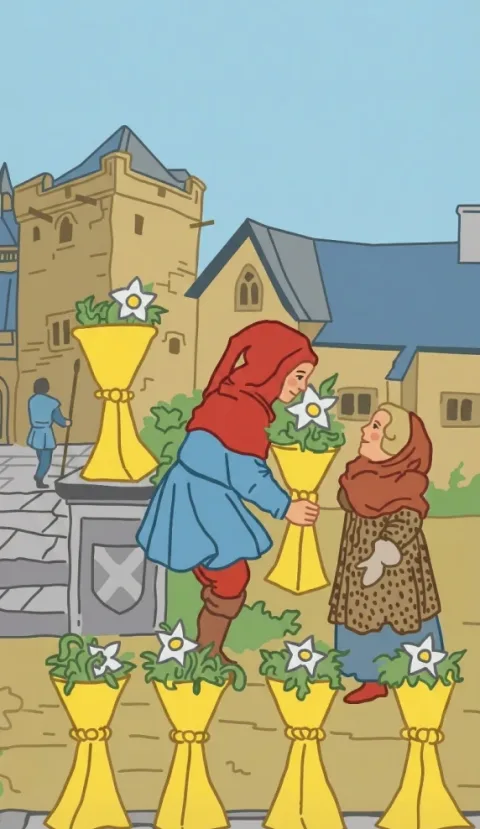
Past — Six of Cups. The picture shows a child handing another a cup of flowers in a calm, safe courtyard. Describing it, you might notice: I learned early that being kind meant giving people what they want. The card points to where the habit may have started.
Now — Two of Swords. A blindfolded figure sits with two crossed swords, perfectly balanced and perfectly stuck. The reaction might be irritation — that’s me, avoiding the choice by agreeing to everything. The card names the present pattern.
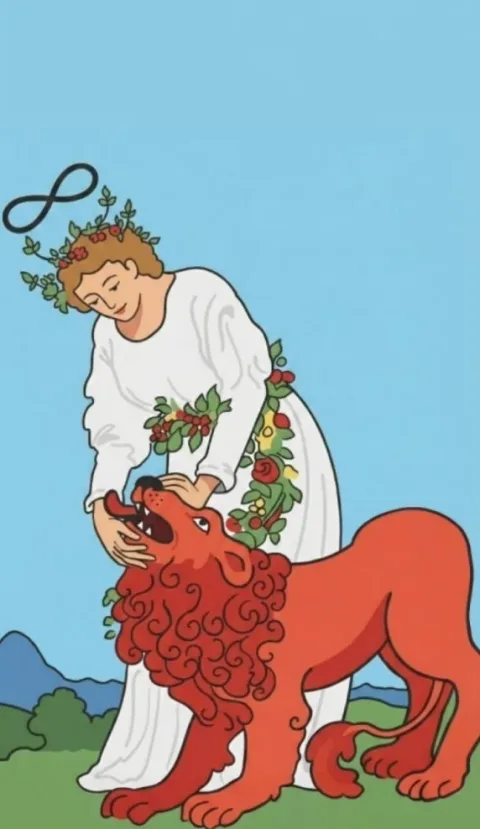
Next step — Strength. A woman gently holds a lion’s jaws, without force. The traditional meaning is courage and patience. Together with your question, it can read as: strength doesn’t have to be harsh; I can say no kindly.
What you take with you: one small step — this week, say “let me think about it” before saying yes. The reading didn’t predict anything. It turned a vague frustration into a pattern you can see and a step you can take.
Noticing patterns over time
In reflective tarot, one reading is a moment, while many readings become a pattern. Keeping a simple record — the date, your question, your mood, the cards and one line about what you noticed — turns tarot into a kind of journal that talks back.
Over a few weeks you start to see things you would miss day to day: which questions keep returning, which moods come with them, and which cards keep showing up. If the same card appears again and again, it isn’t a sign from fate — but it is worth asking why that image keeps feeling relevant. If The Hermit keeps coming back, you might ask whether you need more quiet; if the Two of Cups returns, whether connection has been on your mind lately.
A simple rhythm helps. Once a week, read back over your notes and ask three questions: What did I keep asking about? Which mood came up most often? What did I actually do after a reading? The answers are often more useful than any single card, because they show you your own habits from the outside. A notebook works perfectly well for this; what matters is that you write the question down before you draw and one honest line after.
Does any tarot deck work?
Any tarot deck with pictures works for reflective tarot, as long as all 78 cards give you something to look at — the classic Rider-Waite-Smith, a Tarot de Marseille, or a modern illustrated deck. What matters is the images, because they are what you reflect on. In the Rider-Waite-Smith tradition every card shows a scene; in a Tarot de Marseille the number cards show patterns of cups, coins, swords and wands, which invite a slower, more abstract kind of looking. Choose a deck whose pictures you enjoy looking at, because you will be spending time with them.
If you don’t have a deck, you can start with the free tools on this site; each one draws from a full illustrated 78-card deck.
What reflective tarot is not
Reflective tarot is not a prediction: it does not tell you what will happen, and no reading can show what another person thinks or feels. A card can only help you look at your own side of a situation.
It is also not a treatment. Reflective tarot can be a calm way to think, but it does not diagnose anything, heal anything or replace a therapist, a counsellor or a doctor. If you have been struggling for weeks, if you feel unsafe, or if your thoughts frighten you, reach out to a qualified professional or a local helpline today. A good reading can point you towards a conversation; it should never stand in for one.
Tools to start with
You can practice reflective tarot right now, for free and without signing up:
- Card of the day — one card to carry into today.
- Yes or no tarot — a gut check, and the card behind it.
- Three-card spread — past, now and a next step.
- Love tarot — your side of a relationship.
- Birth card — the card your birth date reduces to.
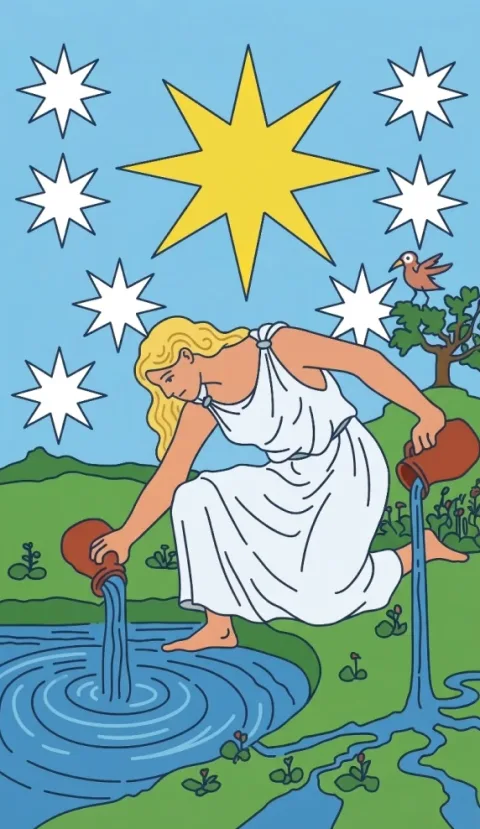
To go deeper into single cards, start with The Star, The Hermit and Two of Cups.
Reflective tarot in the Tarot Told Me app
Tarot Told Me is a reflective tarot app built around this method: you write the question that matters to you, pick a mood, draw your cards and receive one calm reading about you, saved to a journal so the patterns become visible over time. It is coming to iPhone and Android. The waitlist form is at the end of this page. Why we built Tarot Told Me.
Frequently asked
What is reflective tarot?
Reflective tarot is the use of tarot cards for self-reflection rather than prediction. You ask a question about yourself, look at the card’s image, notice your reaction, and use what you notice to see your situation more clearly.
Do I need to believe in magic to use tarot this way?
No. Reflective tarot treats the cards as images that help you think. You don’t need to believe the cards know anything — only to look at them honestly and ask yourself good questions.
Did Carl Jung use tarot?
Jung spoke about tarot in a seminar on active imagination on 1 March 1933, describing the cards as psychological images and linking the Major Arcana to archetypes. Tarot was not a central part of his work, but he saw the cards as a rich set of symbolic images.
Can tarot replace therapy?
No. Reflective tarot can help you think and ask yourself better questions, but it does not replace professional help. If you’re struggling, please reach out to a specialist.
How often should I do a reflective reading?
As often as it’s useful. Many people draw one card a day as a short check-in and do a three-card reading when something specific is on their mind. Asking the same question again and again usually helps less than asking it differently.
Is there a reflective tarot app for iPhone and Android?
Tarot Told Me is a reflective tarot app coming to both iPhone and Android. Until it launches, you can use the free tools on this site.
Sources
- C. G. Jung — Visions: Notes of the Seminar Given in 1930–1934, ed. Claire Douglas (Princeton University Press, 1997)
- Mary K. Greer — “Carl Jung and Tarot” (on Jung’s seminar of 1 March 1933)
- C. D. Morgan & H. A. Murray — “A method for investigating fantasies: the Thematic Apperception Test” (Archives of Neurology and Psychiatry, 1935)
- Arthur Rosengarten — Tarot and Psychology: Spectrums of Possibility (Paragon House, 2000)
- J. W. Pennebaker & S. K. Beall — “Confronting a traumatic event: toward an understanding of inhibition and disease” (Journal of Abnormal Psychology, 1986)
- Baikie & Wilhelm (2005) — Emotional and physical health benefits of expressive writing (review incl. Pennebaker & Beall, 1986)
- M. Dummett — The Game of Tarot (Duckworth, 1980) — the history of the cards