Tarot basics
How to ask tarot a better question
A question about you and about now usually gets you further than a question about someone else's future. Here's how to rewrite yours, with examples to borrow.
What are good tarot questions?
Good tarot questions are open questions about your own side of a situation: what you feel, what you want, what you could try next. They start with "what" or "how" more often than "will," and they stay in the present instead of reaching into next year. A question like that gives a card something to work with, because you're the one who can answer it.
Most of us don't start there. We start with the thought that keeps us up at night: Will he come back? Will I get the job? Is this going to work out? That's completely human. It's just that a card can't see the future, so a question about the future leaves you holding a picture and nothing to do with it.
Why the question matters more than the card
In reflective tarot, a card is a picture to think with, not a message from somewhere. The tradition gives each card a set of themes, and your question decides which of those themes you look at. The same card can open very different doors depending on what you asked.
Say you draw The Hanged Man, traditionally read as pause, surrender and seeing things from a new angle. If you asked "Will we get back together?", there's not much to say. If you asked "What am I avoiding looking at in this?", the card suddenly has room to be useful. You might notice you've been waiting for something to change on its own.
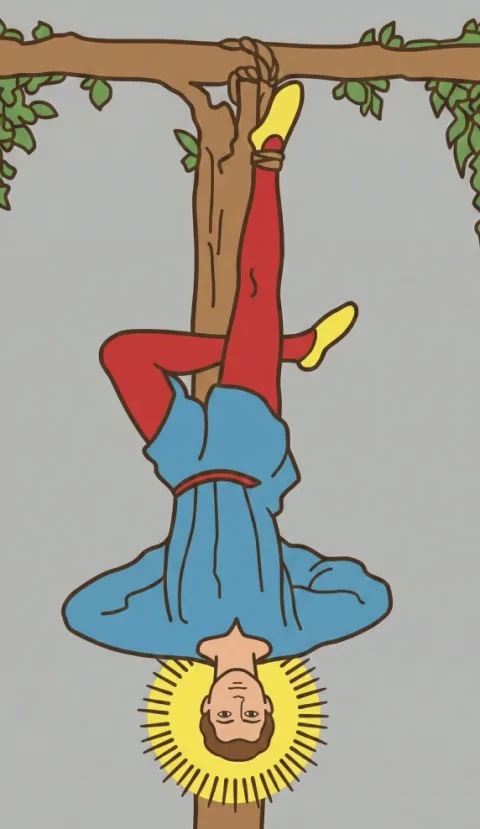 Card meaningThe Hanged ManThe Hanged Man — traditionally read as pause and a new point of view. A prompt: what would you see if you stopped pushing for a minute?
A better question doesn't get you a better card. It gets you a better conversation with yourself.
Instead of predicting, ask about you and now
The simplest shift is to move the question from someone else to you, and from later to today. You don't have to give up the worry behind it. You just turn it so that it faces a part of the situation you can actually touch.
| Instead of | Try |
|---|---|
| Will he text me back? | Do I want to reach out first, and what's stopping me? |
| Does she still love me? | What do I need from this relationship right now? |
| Will I get the job? | What can I bring to the interview that feels true to me? |
| Is this the right decision? | What am I hoping this decision will give me? |
| When will things get better? | What would make this week a little easier? |
| Am I going to be alone forever? | What kind of connection am I missing most lately? |
Notice that none of the rewrites pretend the original worry isn't there. "Will he text me back?" is still underneath "Do I want to reach out first?" But the second question is one you can sit with, and one you can answer by the end of the evening.
The question you can answer yourself is usually the one worth asking.
Question starters that tend to work
If a blank page makes it hard to phrase anything, borrow a starter. These keep the question open and keep it on your side:
- What do I need to know about how I feel about…?
- What am I not letting myself see in…?
- What would help me approach… with more ease?
- What part of this is mine to deal with?
- What am I most afraid of here, and is it likely?
- What would I do if I trusted myself a little more?
- What's one small step I could take this week?
Pick the one that fits and finish the sentence with your situation. You can use them with one card or with a spread. For a closer look at love questions specifically, our guide to love tarot walks through a three-part reading built around your side of things.
How to rewrite a question in four steps
When a question comes out tangled or anxious, you don't need to start over. You can reshape it in a minute or two.
- Write the question exactly as it came to you. Don't edit it yet. "Is he going to leave?" is a fine place to begin.
- Find the feeling under it. Ask yourself what the question is really about: fear, hope, tiredness, wanting to be chosen. One word is enough.
- Move the question to your side. Replace the other person or the future with "I" and "now." "Is he going to leave?" might become "What am I afraid will happen if things change?"
- Check that you could answer it. Read the new version and ask: could I say something true about this tonight? If yes, it's ready. If not, make it smaller.
If you still want a quick lean on something simple, a yes-or-no question can work, as long as you treat the result as a starting point. How to read yes or no tarot covers how to ask those well.
An example: one worry, three questions
Say you've been in the same job for four years and you're restless. The first question that comes up is "Will I find something better if I quit?" No card can know that. So you rewrite it, and you try three versions, one card each.
First: "What am I hoping a new job would give me?" You draw The High Priestess, traditionally read as intuition and quiet inner knowing. You might notice you already have a sense of what you want, and you've been waiting for permission to say it.
Second: "What's keeping me where I am?" You draw the Four of Pentacles, traditionally read as holding on tight and protecting what feels safe. That might bring up the steady paycheck, or simply the comfort of knowing your way around.
Third: "What's one small step I could take this week?" You draw the Page of Swords, traditionally read as curiosity, questions and gathering information. It could be as simple as messaging one person who does the work you're curious about.
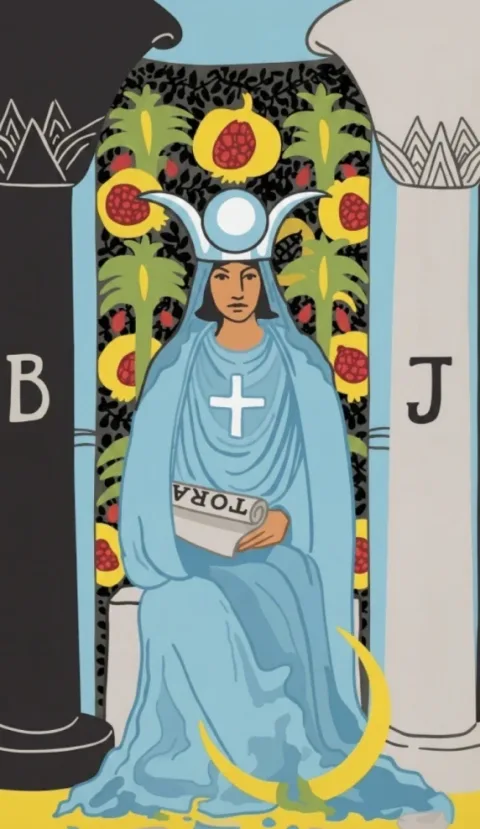
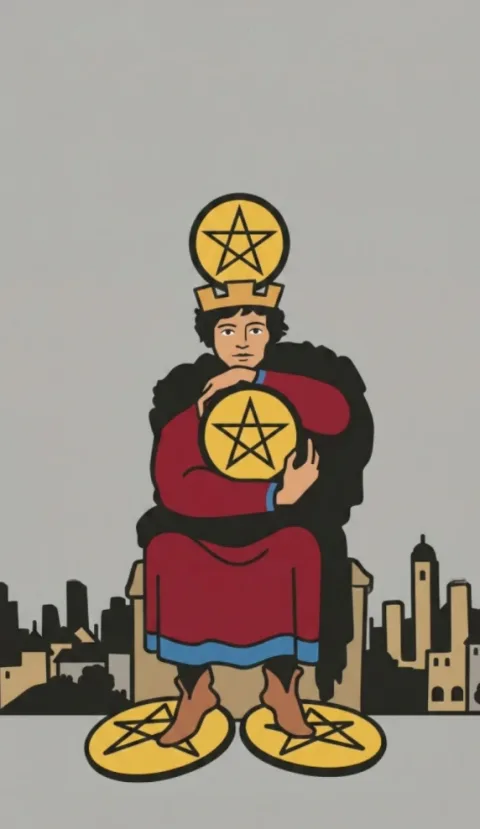
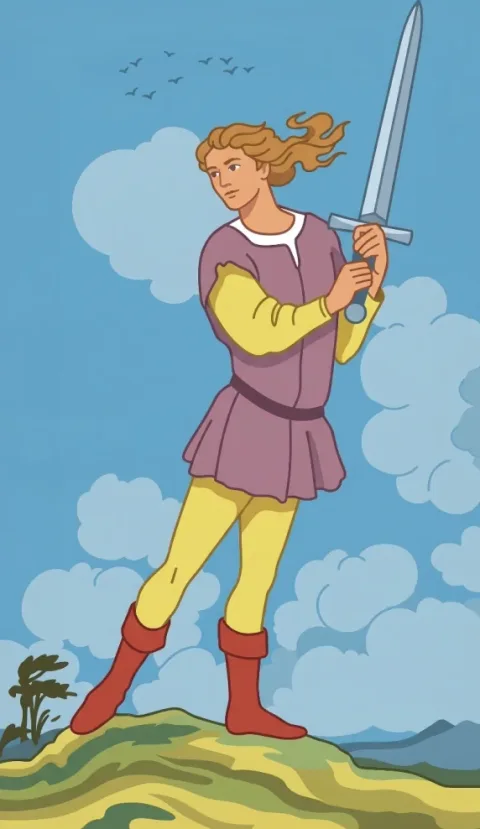
None of these cards decided anything. Together, they gave you three things to think about that the first question never could. You can read more about each one on the card meanings pages.
What your reaction to the card can show
Often the most useful moment in a reading is the half-second after you turn the card over. Relief, disappointment, a little "oh" of recognition: that reaction may tell you more than the card itself. It shows you what you were hoping to see.
If you feel let down by a card, you could ask yourself what you wanted it to be instead. If you feel a jolt of recognition, you could stay with that for a moment and write down what it touched. Neither reaction is right or wrong. Both are information about you, which is exactly what a good question is trying to reach.
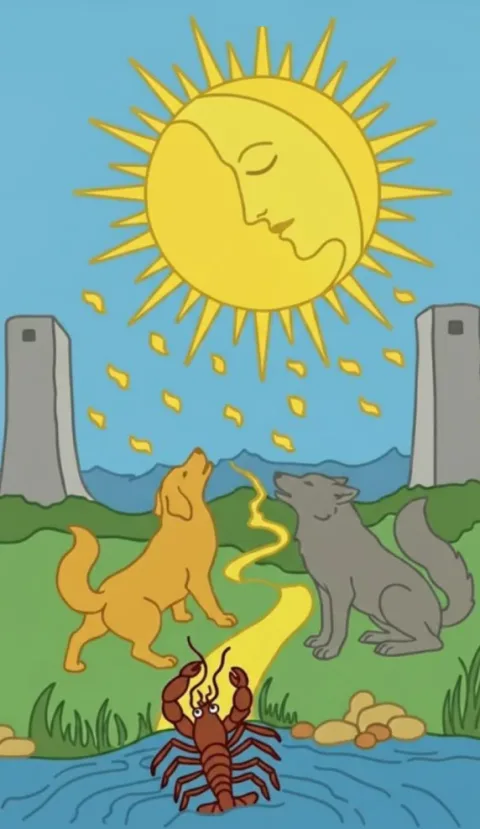 Card meaningThe MoonThe Moon — traditionally read as uncertainty and things not yet clear. A prompt: what feels foggy right now, and what do you already know for sure?
Questions a card shouldn't be the one deciding
Some questions deserve more than a picture. If you're wondering about your health, a big money decision, a legal matter or your safety, a card can help you notice how you feel about the situation. The decision itself belongs with you and with someone qualified you trust: a doctor, an advisor, a lawyer, or a friend who knows you well.
The same goes for questions about what someone else is thinking or feeling. A card can't tell you what's going on inside another person. What it can do is help you look at your own side: what you need, what you're ready to say, what you'd like to ask them directly. Often, the most honest next step is a real conversation, not another draw.
Notice the questions you keep coming back to
Over a few weeks, the questions themselves can become the most revealing part of the practice. If you write them down, you might find you've asked some version of "Am I doing enough?" six times in a month. That repeat may say more than any card you drew.
You don't have to fix the pattern. Just noticing it is a gentle kind of information. You could ask yourself where the question comes from, whose voice it sounds like, and what you'd say to a friend who kept asking it. Sometimes the next good question is simply: "Why do I keep asking this?"
Try a better question now
Take the question that's been on your mind today. Write it down as it is, find the feeling under it, and turn it toward you and now. Then draw one card and give yourself a minute with it before you reach for any meaning.
Tarot Told Me is a reflective tarot app coming to iPhone and Android, built around the same idea: a reading starts with your question, not with a random card.
Frequently asked
What are good questions to ask tarot?
Open questions about your own side of a situation tend to work best: "What do I need right now?", "What am I avoiding?", "What's one small step I could take?" They give the card something to work with, because you're the one who can answer them.
Can you ask tarot yes or no questions?
You can, as long as you treat the result as a lean rather than a verdict. A yes-or-no draw is most useful when you pay attention to how you feel about the answer, since that reaction often shows what you were hoping for.
Why shouldn't I ask tarot about someone else's feelings?
A card can't see inside another person, so any answer about their feelings would be a guess. Turning the question to your side, such as "What do I need from them?", keeps the reading about something you can actually act on.
How do I phrase tarot questions about love?
Keep them about you and about now. Instead of "Does he love me?", try "What do I want from this relationship?" or "What feels unsaid between us, on my side?" You can still bring your worry; you just face it from where you stand.
Is it okay to ask the same tarot question again?
It's fine, but asking again right away usually means you're hoping for a different card. You could pause and ask yourself what you wanted the first card to say. If a question keeps returning over weeks, that repeat can be worth reflecting on.
Does Tarot Told Me use AI to answer my questions?
The free tools on this site show how each card is traditionally read. In the app, personal readings are written by AI based on your question, your mood and the cards you drew, as a prompt for your own reflection.