Spreads
Tarot for a situationship: 3 questions when you don't know where you stand
When nothing is defined, it's easy to ask the cards what the other person thinks. These three questions turn the reading back to the part you can know: your own side.
What is situationship tarot?
Situationship tarot is a reading for a connection that hasn't been named: more than friends, less than a relationship, and nobody has said out loud what it is. Instead of trying to guess where the other person stands, the reading looks at where you stand. You ask about what you want, what you're putting up with, and what you could say or do next.
That focus matters because a situationship runs on guessing. You read the timing of texts, the tone of a "haha," whether they mentioned next weekend. It's tiring, and it keeps your attention on someone else's mind, which is the one place you can't see into. A card can't see there either.
Why the usual questions keep you stuck
The questions that come up first are almost always about the other person. Does he like me? Is she seeing someone else? Will this turn into something? They feel urgent, and they're completely understandable. But no card knows the answer, so any reading built on them becomes one more round of guessing.
Questions about you work differently. You can answer them tonight. They don't depend on a reply, a mood or a label. And they often show you something the guessing was covering up: that you've known what you want for a while, and you've been waiting for the other person to say it first.
You may not know where they stand, but you can find out where you stand.
Turn the question to your side
You don't have to drop the worry. You just turn it a little so it faces the part of the situation you can touch.
| Instead of | Try |
|---|---|
| Does he actually like me? | How do I feel when I'm with him, and after? |
| What are we? | What would I like us to be? |
| Is she talking to someone else? | What would I need to feel secure here? |
| Will this turn into a relationship? | Do I want it to, and am I willing to ask? |
| Why won't he commit? | What am I accepting that I don't really want? |
| Should I wait? | How long have I already been waiting, and how does it feel? |
Each rewrite keeps the original question underneath. "What would I like us to be?" still holds "What are we?" But now it's a question that starts with you, and that's usually where the next step starts too. For more on reading love questions this way, see love tarot reading: see your side of it.
Three questions when you don't know where you stand
This small spread uses three cards, one for each question. You can draw them all at once or one at a time, with a pause between.
- What do I want from this connection? Not what you'd settle for, and not what seems reasonable to ask. Just what you'd honestly like, if you didn't have to guess how it would land.
- What am I accepting that doesn't sit right with me? The thing you shrug off, explain away or tell your friends is fine. It might be small. It might be the whole arrangement.
- What's one thing I could say or do next? A step that's yours to take, no matter what the other person does. It could be a conversation, a boundary, or simply some time to think.
The order is deliberate. First you name the wish, then the gap, then the move. You don't need to decide anything big by the end of it.
How to lay out the spread
You don't need a special setup. A few quiet minutes and a place to write are enough.
- Write down the situation in one or two lines. Keep it plain: "We've been seeing each other for four months. We haven't talked about what it is."
- Notice your mood. One word: hopeful, anxious, numb, tired. It shapes how you'll see the cards.
- Draw three cards, one for each question. Place them left to right: want, accepting, next.
- Look before you read. Spend a few seconds on each picture before looking up how it's traditionally read. Who's there, what are they doing, how does it feel?
- Read each card against its question. Look up the traditional reading on its meaning page, then write one line about what it brings up for you.
- Write one sentence for the whole spread. Something like: "I want more than this, I've been pretending I don't, and I could ask him on Friday."
How a few cards are traditionally read here
Any card can come up, and all of them can be useful. A few show up in conversations about unclear connections often enough that it helps to know how they're traditionally read.
 Card meaningTwo of CupsThe Two of Cups — traditionally read as mutual connection and meeting halfway. A prompt: where in this do you feel met, and where don't you?
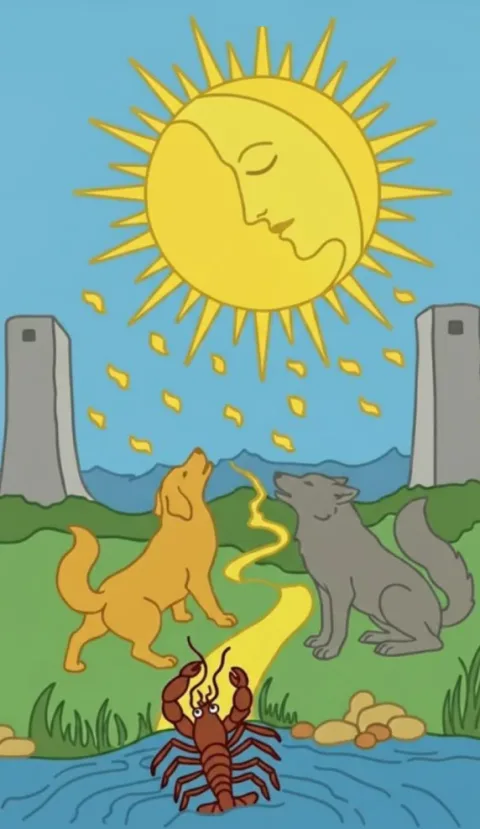
The Moon is traditionally read as uncertainty, fog and things not yet clear. In a situationship, it can be a reminder to notice how much of what you "know" is actually a guess. You could ask yourself which parts are facts and which are stories you've filled in.
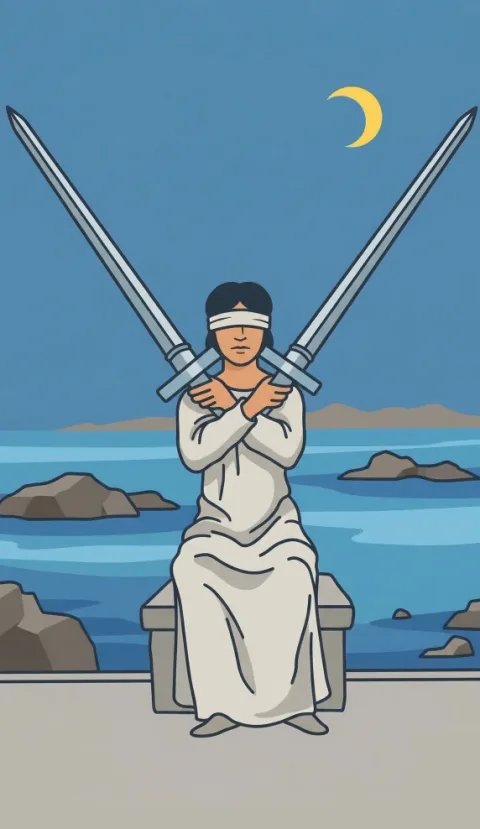 Card meaningTwo of SwordsThe Two of Swords — traditionally read as a stalemate and avoiding a choice. A prompt: what decision have you been putting off, and why?
The Eight of Cups is traditionally read as walking away from something that no longer fills you up. If it comes up, it doesn't mean you should leave. It might just invite you to ask what you'd be looking for if you did.
An example: four months, no label
Say you've been seeing someone for four months. You text most days, you've met a few of each other's friends, and neither of you has said what this is. You draw three cards.
For "What do I want?", you draw the Two of Cups. You might notice you want something mutual and named: not a ring, just knowing you're both in it. For "What am I accepting?", you draw The Moon. It could bring up how much time you've spent decoding messages instead of asking a direct question. For "What could I do next?", you draw the Page of Cups, traditionally read as an open heart and a first, tender message. That might point you toward saying how you feel, simply, without a speech.
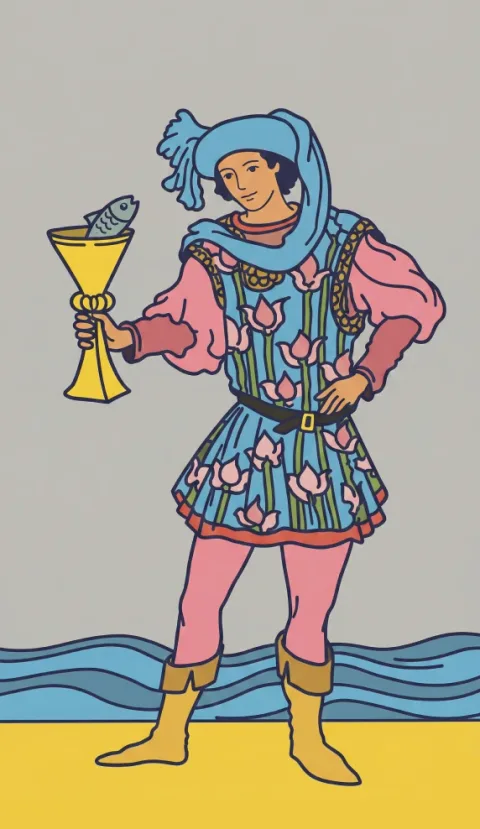
The cards didn't tell you how the other person feels or what will happen if you speak up. They gave you three pictures, and you used them to put into words what you already sensed.
What your reaction can tell you
The moment you turn a card over, you'll probably feel something before you think anything. A sinking feeling, relief, a flicker of "I knew it." That reaction may tell you more than the card. It shows you what you were hoping to see, and sometimes what you were afraid of.
If a card disappoints you, you could ask what you wanted it to say. If you find yourself drawing again because you didn't like the first one, that's worth noticing too. And if you've done this spread a few times over a few weeks, look at your notes. If the same feeling keeps coming up under "What am I accepting?", that repeat may be the clearest part of the whole reading.
When a card shouldn't be the one deciding
A situationship can feel small from the outside and heavy from the inside. A card can help you notice what you feel. It shouldn't be the thing that decides whether you stay, leave, or have the conversation. That decision belongs to you, and it can help to talk it through with a friend who knows you well.
If a connection ever leaves you feeling unsafe, controlled or afraid, that's not a question for the cards at all. Please reach out to someone you trust or to a professional who can help you think through your options and your safety.
Draw your situationship spread
Pick a quiet moment, write one line about where things are, and draw three cards for the three questions: what you want, what you're accepting, what you could do next. Give yourself a minute with each before you look anything up.
Read next · SpreadsLove tarot reading: see your side of it8 min read
Tarot Told Me is a reflective tarot app coming to iPhone and Android, built around the same idea: a reading starts with your question, not with a random card.
Frequently asked
Can tarot tell me what my situationship partner feels?
No. A card can't see into another person's mind, so any answer about their feelings would only be a guess. What a reading can do is help you notice how you feel and what you want, which is often the clearer starting point.
What is a good tarot spread for a situationship?
A simple three-card spread works well: one card for what you want from the connection, one for what you're accepting that doesn't sit right, and one for a step you could take next. It keeps the reading on your side, where you can act.
What questions should I ask tarot about where I stand?
Try questions that start with you: "What do I want this to be?", "What would I need to feel secure here?" or "What am I avoiding saying?" They're questions you can answer yourself, so the card has something to work with.
What if I draw The Moon in a love reading?
The Moon is traditionally read as uncertainty and things not yet clear. In a situationship, it might invite you to separate what you actually know from what you've been guessing, and to ask yourself where a direct question could replace the guessing.
Should I use tarot to decide whether to end a situationship?
A card can help you notice what you feel, but it shouldn't make the decision. You could use a reading to get clearer on your own side, then talk it through with someone you trust before you choose.
How often can I do a situationship tarot reading?
There's no rule, but doing the same reading many times in a row usually means you're hoping for a different card. Once every week or two, with notes, tends to show you more, because you can see which feelings keep coming back.